Commercial Waste in Basildon for reliable business clearance and responsible disposal
Commercial waste in Basildon needs a service that is organised, adaptable and clear about what happens to the materials once they are collected. We handle business waste removal for premises that generate regular refuse, periodic clear-outs or one-off loads that need prompt attention. That can include mixed office waste, packaging, redundant fittings, small items of furniture and other non-hazardous materials that are no longer needed on site.
Our approach is designed to keep disruption low while giving businesses a straightforward way to clear unwanted waste without managing the practical burden themselves. Where required, we can cover larger clean-outs alongside routine collections, and we can also support jobs that need careful separation of recyclable material from general waste. If you are comparing options, it is sensible to think about what needs removing, how access works and whether the waste is likely to include specialist items.
When you are ready to move forward, request a quotation with a brief outline of the load and the type of premises involved. A concise description usually helps us match the right collection approach to the work. You can also use the site’s pricing and quote information to understand the usual factors before you decide how to proceed.
Business waste removal tailored to day-to-day commercial needs
Business waste removal is often most useful when it fits around the working day rather than interrupting it. That may mean clearing unwanted items from a stockroom, removing accumulated packaging from storage areas or taking away broken office furnishings after a refit. The main aim is to keep the premises usable while waste is removed in a controlled, tidy way. For many customers, the key decision is whether the load should be handled as a mixed collection or separated into categories that suit recycling and disposal.
Because business waste can build up in different ways, it helps to look at the practical details before arranging collection. Access, volume and sorting requirements can all affect how the job is planned. If waste is spread across floors or departments, grouping it together in advance can make the collection simpler. If there are items that need special handling, those should be identified early so the job can be assessed properly and any unsuitable materials can be kept separate from the main load.
Useful considerations before booking include:
- the approximate amount of waste to be removed
- whether the items are loose, bagged or stacked
- if there are bulky objects that need dismantling
- any restricted access points, stairs or loading bays
- whether recycling separation would be helpful for the job
Office clearance for workspaces, storage areas and refits

Office clearance usually calls for a careful balance between speed and tidiness. Desks, chairs, filing units, shelving, monitors and mixed paperwork can all form part of a clearance depending on how a workspace is being reorganised. We can help with the removal of redundant office contents so that rooms can be emptied for refurbishment, downsizing or a full change of use. The emphasis is on making the space easier to hand over, reconfigure or put back into service.
Some office clearances are straightforward, while others need a more measured approach because items are stored in cupboards, archives or shared areas. In those cases, it is worth separating what stays from what goes before the collection begins. Confidential shredding may be relevant where paperwork must be handled securely, while reusable furniture can be treated differently from general waste. A clear plan helps avoid confusion when several departments have contributed items to the same space.
We also support a range of non-office commercial clearances where the same careful method is useful. If the job involves furniture that is awkward to carry, mixed materials that should be sorted, or a room that needs to be cleared in stages, the work can usually be organised to suit the layout. For customers who are preparing a quotation request, it is usually enough to describe the kind of workplace, the main items involved and any time constraints that affect access.
Furniture, fixtures and bulky items removed from commercial premises
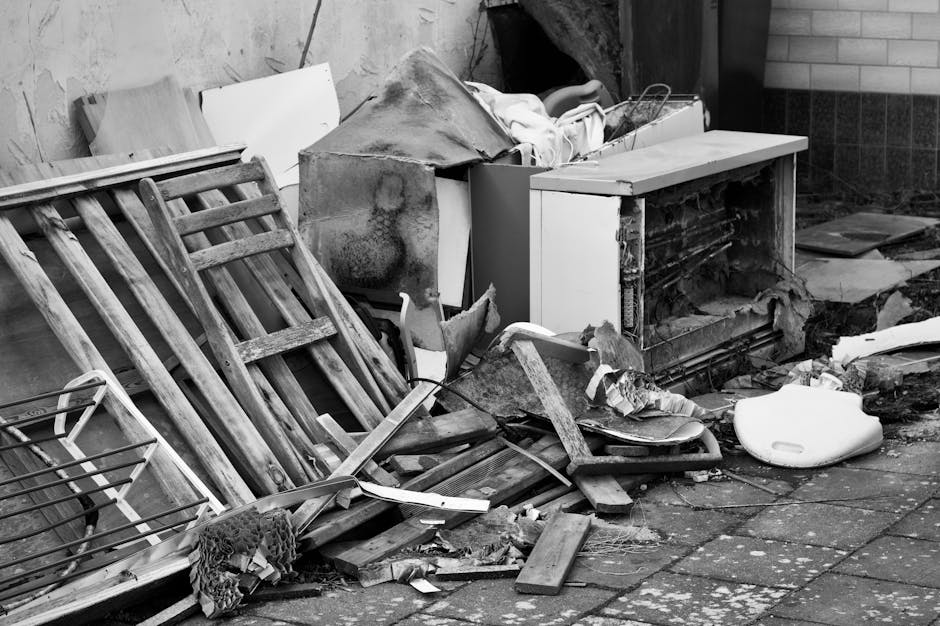
Commercial premises often hold furniture that has outlived its useful life but still takes up valuable room. Chairs, tables, cabinets, reception pieces and shelving can all become obstacles once layouts change. Our furniture removal and furniture disposal services are intended for items that are no longer wanted on site and need to be taken away responsibly. Where appropriate, we can combine them with broader waste clearance so that bulky and smaller items are dealt with together.
It is common for furniture jobs to include a mix of reusable and worn-out pieces. The decision to remove them together or separately can depend on condition, material type and the space available for loading. Some items may only need to be dismantled to exit the building safely, while others can be carried as complete units. Choosing the right approach matters because it affects handling, sorting and how easily the premises can be left clear afterwards.
Related items often include mattress and sofa disposal where business premises hold domestic-style furnishings, as well as the removal of one-off bulky pieces from offices, waiting rooms and storage spaces. If you are planning a disposal job, it helps to think about whether the items are kept on one floor or several, whether they are still assembled and whether anything fragile or sharp is attached. Those details support a more accurate quotation.
Bulky clearances for storage rooms, garages and mixed loads

Some commercial waste jobs are less about routine rubbish and more about making overfilled rooms usable again. Garage clearance, loft clearance and home-clearance-style work can all be relevant where a business stores archived stock, old equipment or miscellaneous items in spaces that have become difficult to navigate. The right service depends on the nature of the contents, the access available and whether the load is mixed enough to need sorting on site.
Mixed clearances often benefit from an item-by-item approach. That makes it easier to decide what is recyclable, what needs disposal and what may require separate handling because of its material or size. If shelves, containers or old fixtures are built into the space, they can sometimes be removed as part of the overall job. The benefit for the customer is that the room can be handed back in a usable state rather than left partially cleared.
For many businesses, the question is not whether the clear-out can be done, but how to do it in a way that suits the workflow of the building. If you are arranging a larger load, it may help to note whether there are narrow corridors, upper floors or limited parking near the collection point. A clear description lets the job be assessed sensibly and reduces the chance of last-minute changes.
Clearance of specialist items and separated waste streams
Some commercial waste does not belong in a standard mixed load, even when it comes from an ordinary workplace. Fridges, appliances and certain larger fittings may need separate attention, while hazardous waste disposal must be approached with particular care and only where the waste stream is suitable for that service. The point of separating these materials is to keep handling appropriate to the item, the material and the disposal route.
If a site contains items that are likely to be classed differently from general rubbish, it is better to identify them before the collection is arranged. That can include older appliances, items with electrical components, or waste that has been stored in a back room for a long time and may have mixed with other materials. Clear identification helps avoid unsuitable loading and makes it easier to decide which parts of the job should be quoted together and which should be assessed separately.
Where separation is helpful, it can also support better recycling choices. Businesses that want to keep general waste, recyclable material and specialist items distinct can usually do so with a little planning. If you are unsure which items belong in the main load, a short written description is often enough to start the assessment, and a few pictures can be useful if the waste is bulky or packed closely together.
Recycling, sustainability and responsible handling of commercial rubbish
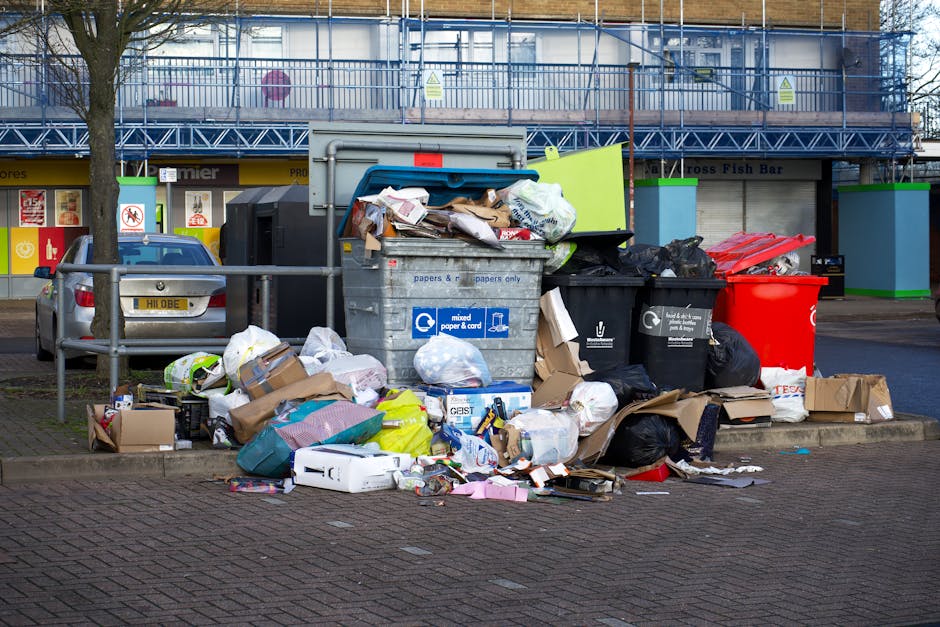
Commercial waste management is not only about getting items off site; it is also about deciding which materials can be recovered and which need disposal. Recycling and sustainability matter because offices, shops and other workplaces often produce a mixture of cardboard, metal, plastics, timber and general refuse. A sensible waste plan aims to keep reusable or recyclable items separate where practical so that the final load is handled more efficiently.
That approach can be particularly helpful after refurbishments, clear-outs and relocations, when packaging and redundant fittings tend to arrive together. The best option depends on how the waste is presented. Bagged materials are usually simpler to sort than loose mixed items, while stacked materials are often easier to assess than waste spread across several rooms. If the contents are varied, it is worth noting what is recyclable, what is general waste and what should not be included.
Customers sometimes want reassurance that the clearance is being handled in a way that respects both the premises and the materials themselves. We can work through the load in a practical order, separating obvious categories where that helps and keeping the process straightforward for the customer. That leaves the business with less to manage after the collection and a clearer understanding of what has been taken away.
Pricing, quotations and what shapes the cost of a collection
Commercial waste quotations are usually influenced by the amount of material to remove, the type of items involved and how easily they can be loaded. A large clear-out with bulky items is naturally different from a small removal of bagged waste. Access matters too, especially where items must be taken through stairwells, shared corridors or restricted loading areas. A sensible quotation reflects the practical work involved rather than a simple one-size-fits-all approach.
To prepare a useful request, it is often enough to provide the main item types, the approximate volume and any relevant access details. If there are several distinct waste streams, it can help to separate them in your description. That way, the assessment can take into account the right handling method for each part of the load. Clear information at the start reduces unnecessary back-and-forth and makes it easier to understand the likely scope of the collection.
When you are ready, you can request a quotation with a short summary of the job and the location within the premises. If the clearance is complex, a list of the major items is often useful. If it is simple, a brief note may be enough to begin. Either way, the goal is to make the process clear, fair and suited to the waste in question.
About Basildon
Basildon is a large town in Essex, developed as one of the post-war new towns that transformed the southern part of the county in the middle of the twentieth century. Its modern centre sits alongside older settlements that long predate the new town era, including the villages and parish landscapes that helped shape the wider district. The town is well known for its planned layout, with shopping, civic and residential areas arranged around a central core that has continued to evolve over time. Basildon’s transport links are a notable part of its character, with rail services connecting the town to London and the wider Essex corridor, while major roads tie it into the county’s network. The town’s growth also brought substantial public realm, schools, parks and leisure facilities, giving it a varied urban structure rather than a single historic centre. Wat Tyler Country Park, on the edge of the borough, offers open landscapes and marshland views connected to the Thames estuary environment, while the town centre includes cultural and civic landmarks associated with its post-war development. Basildon’s history is not only a story of twentieth-century planning; it also reflects the older agricultural, parish and settlement patterns that remained visible in surrounding areas. That blend of new-town architecture, green spaces and surviving older features gives the place a layered identity. Housing estates, business parks and retail districts sit alongside quieter lanes and nearby countryside, making the town feel both practical and distinctive. Over time, Basildon has developed a reputation shaped by movement, rebuilding and adaptation, with its built environment reflecting different periods rather than one single era.
House and flat clearances alongside commercial waste work
Although this page is focused on commercial waste, related clearance services are often useful where premises contain domestic-style rooms, rented accommodation above a shop or staff areas that have accumulated general belongings. House clearance and flat clearance can be relevant in those circumstances, especially when the job involves mixed items that need removing in an orderly way. The service choice depends on what is actually present, not simply on the name of the building.
That same distinction matters for contents such as bedroom furniture, kitchen items or lightweight household effects that have ended up in a commercial setting. If a room is being repurposed, it may be simpler to clear the contents first and then deal with any larger items or fixtures separately. This gives the customer more control over what leaves the property and can help avoid confusion when different types of waste are mixed together in one place.
Where businesses are preparing for a move or a refit, it can be useful to list the main areas involved rather than every individual item. That gives enough context for an assessment without turning the enquiry into a full inventory. If needed, a short note about what must remain on site can help prevent accidental removal and keep the work aligned with the intended use of the premises.
Planning a smooth commercial clearance
Good planning keeps a commercial clearance practical from start to finish. The most helpful step is usually to identify what is to be removed and what must stay, then group the waste so it can be assessed without guesswork. If items are scattered across several rooms, setting them aside in one place can make collection easier. If the waste includes mixed materials, a basic sort into reusable, recyclable and general rubbish can also be beneficial.
Two other points often make a difference: access and timing. If a building has limited parking, security controls or narrow internal routes, these should be mentioned early. If the clearance needs to fit around trading hours or staff movement, that should be noted as well. Practical detail helps the work proceed with fewer interruptions, especially where the premises are busy or the items are large.
For the next step, send a concise description of the waste and ask for a quotation. If you prefer, you can also review the pricing and quotes page first and then contact us once you have a clearer picture of the job. Either way, the final aim is simple: a clean, workable space and a disposal plan that suits the materials involved.