Recycling and Sustainability — Commercial Waste Basildon
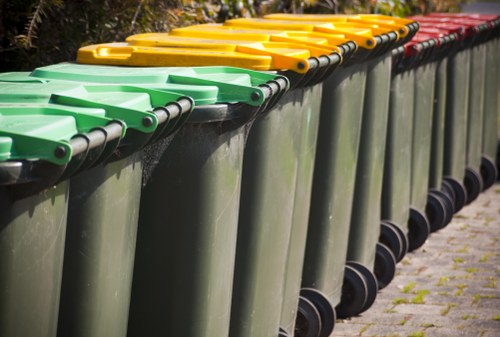 Commercial Waste Basildon is committed to building an eco-friendly waste disposal area across the borough and supporting a resilient, sustainable rubbish area for businesses of all sizes. Our approach balances practical collection, local resource recovery and long-term carbon reduction. The focus is on creating a circular economy for commercial waste in Basildon, where materials are diverted from landfill and reused, reprocessed or responsibly recovered.
We have set a clear recycling percentage target to drive measurable progress: a 65% recycling rate for commercial waste by 2030. That target applies to the combined streams collected from retail, office, construction and light industrial sectors in the Basildon area and represents an ambitious but achievable milestone for Basildon commercial waste management.
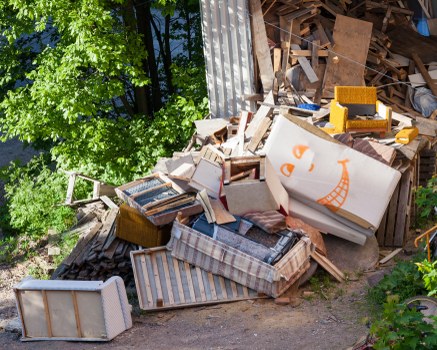 Our local infrastructure supports this ambition. Commercial customers make use of nearby transfer stations and resource hubs — including the Basildon transfer facilities and neighbouring Essex transfer stations — which act as efficient consolidation points before material is transported for recycling or reprocessing. These transfer stations reduce vehicle movements and improve route efficiency across the borough, contributing to a lower-carbon waste network.
Practical Recycling Activity in the Borough
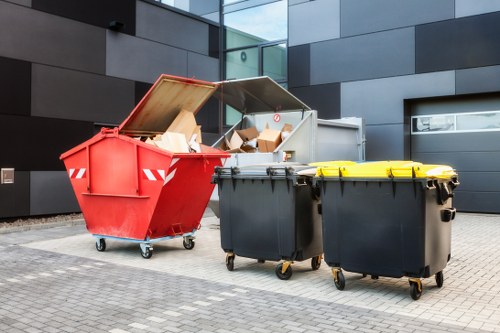 The borough’s approach to waste separation for businesses emphasises practical, site-level segregation. Typical commercial waste separation activity includes separate containment for:
- Paper and cardboard (dry mixed recyclables)
- Glass and metal (bottles, tins and cans)
- Plastics sorted by accepted categories
- Food waste collection for premises that generate large organic streams
- Hazardous and WEEE streams segregated and handled through authorised routes
These separation practices align with the broader Basildon commercial waste strategy and help ensure materials can be recycled at local and regional plants rather than being lost to residual disposal. Small changes in business-side segregation can significantly increase the overall recovery rate.
Low-Carbon Collection Fleet
One of the most visible sustainability initiatives is the rollout of low-carbon vans and collection vehicles. Our commercial fleet increasingly uses electric vans, hybrid and low-emission fuel options to reduce local air pollution and whole-life carbon. Using low-carbon vans for the final-mile and transfer runs is a core part of lowering emissions across the entire Basildon commercial waste chain.
 Partnerships with local charities and reuse organisations play a key role in diverting good-quality commercial items from the waste stream. By working with community benefit organisations and certified reuse centres, businesses in Basildon can route surplus stock, furniture and fixtures to charitable partners who refurbish and redistribute items. These collaborations extend the life of products, reduce demand for new goods and support social value in the borough.
To make sustainable rubbish areas work at scale we champion a set of core practices for businesses to adopt:
- Consistent on-site segregation (clear signage, colour-coded bins and staff training)
- Contracting to transfer stations close to the borough to lower transport emissions
- Scheduling collections to optimise route density and minimise empty running
- Partnering with charities for reuse of unsold or surplus commercial goods
These measures, when combined with a low-carbon fleet and targeted reuse partnerships, accelerate progress toward the recycling percentage target while strengthening the local circular economy for commercial waste in Basildon.
Monitoring Progress and Community Impact
Measurement matters. We monitor tonnages at the transfer station level, audit the composition of commercial collections and track emissions associated with transport and treatment. Regular reporting against the 65% recycling ambition helps businesses and service providers identify opportunities to improve separation and increase recovery rates.
What Businesses Can Expect
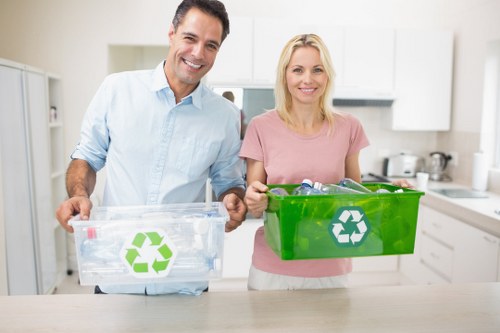 Businesses participating in the Basildon programme benefit from coordinated collection schedules, advice on segregation for specific sectors (retail, hospitality, manufacturing) and access to vetted reuse partners. This network approach helps convert waste liabilities into resource opportunities, cutting disposal costs while supporting sustainable community outcomes.
In summary, the strategy for Commercial Waste Basildon combines clear targets, robust local transfer station use, active charity partnerships and a move to low-carbon vans to create a practical, measurable and community-focused model of an eco-friendly waste disposal area and sustainable rubbish area. Through these steps we aim to reduce landfill, lower emissions and keep materials circulating in the local economy.
