Health and Safety Policy — Commercial Waste Basildon Services
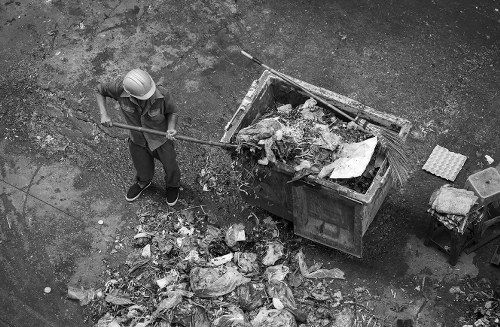 This Health and Safety policy sets out the responsibilities, procedures and controls for operatives and management providing commercial waste Basildon and related rubbish services. The aim is to protect employees, contractors, clients and the public while delivering efficient waste collection, disposal and recycling across the service area. This policy applies to all activities linked to commercial rubbish collection, trade waste handling and site-based containment systems.
We recognise that proactive safety management reduces incidents, downtime and environmental harm. All staff must follow safe systems of work, wear appropriate personal protective equipment (PPE) and report hazards immediately. Managers will ensure training, supervision and risk assessments are current and accessible to everyone working on or near trade waste operations.
 Scope: this policy covers operational crews, vehicle drivers, yard personnel and contracted labour engaged in Basildon commercial waste activities including bin swaps, bulk waste collections, compactors, skip loading and customer-side collections. It also covers site maintenance, vehicle loading, manual handling and segregation of recyclable materials.
Risk Management and Safe Working Practices
Risk assessments will be carried out for all routine and non-routine tasks. Controls will be implemented using the hierarchy of risk control: elimination, substitution, engineering controls, administrative controls and PPE. Typical controls for rubbish collection services include safe vehicle access, secure locking of loads, traffic management on customer sites and well-maintained lifting equipment.
 Key operational requirements include:
- Pre-shift vehicle checks and defect reporting;
- Safe manual handling procedures for bagged and loose trade waste;
- Clear segregation of hazardous items and chemical wastes;
- Use of spotters and traffic marshals at busy collection points;
- Regular maintenance programmes for compactors, lifts and lifting gear.
Supervisors will verify competence through observed task assessments and refresher training. All operatives must understand the risks of sharps, biological waste and chemical contamination and follow spill response and containment procedures provided in operational documentation.
Roles, Responsibilities and Training
 Senior management has overall responsibility for implementing this policy and will allocate sufficient resources for safety, training and equipment. Site managers and operations supervisors are responsible for day-to-day compliance, incident investigation and continual improvement of safety measures within the rubbish collection and commercial waste service area.
Employees and contractors must: follow safe systems of work; report near misses and accidents; participate in training; and wear declared PPE. They must not bypass safety systems or operate equipment without authorization. Induction and job-specific training are mandatory, with records retained to demonstrate competence in trade waste handling and vehicle operation.
 First aid and incident response: designated first aiders will be present during operational hours. All incidents, however minor, must be reported and recorded. We maintain procedures for emergency spill containment, fire response and ambulance liaison. Where injuries occur, a formal accident investigation will identify root causes and corrective actions to prevent recurrence.
Monitoring, Auditing and Continuous Improvement
Performance will be monitored through regular site inspections, vehicle checks, safety observations and periodic audits of the commercial rubbish service. Key performance indicators include incident frequency rate, near-miss reporting rate and completion of competency-based training. Findings will be used to update risk assessments and operational controls.
Environmental controls are integral to safe waste operations. Measures include secure containment to prevent litter and pollution, correct segregation to reduce hazardous exposures and procedures to ensure compliant transfer to licensed facilities. Continuous improvement seeks to reduce waste handling risks while increasing recycling rates and resource recovery.
Communication and Worker Involvement
We encourage active worker involvement: toolbox talks, safety briefings, suggestion schemes and regular engagement between crews and management help identify practical improvements. Clear signage, documented procedures and easy access to risk assessments support consistent application of safety controls across all commercial waste activities.
Policy review: this Health and Safety policy will be reviewed at least annually or after significant change, incident or regulatory update. Reviews will consider operational changes in the rubbish collection service area, new equipment introductions and lessons learned from audits and investigations. The objective is to maintain a safe, compliant and efficient service for commercial waste customers.
Commitment
Management and employees are committed to implementing this policy and integrating safety into every aspect of commercial waste operations. Compliance with safe working practices, effective training and open reporting will ensure our rubbish collection and trade waste services continue to operate with minimal risk to people and the environment.
This policy is a living document and will be made available to all staff, updated as necessary to reflect best practice and the evolving needs of the waste service area.
